Free Ebook Isaac Newton: And the Scientific Revolution (Oxford Portraits in Science)
And also why do not try this book to review? Isaac Newton: And The Scientific Revolution (Oxford Portraits In Science) is among one of the most referred reading material for any type of levels. When you truly intend to seek for the new motivating book to review and you don't have any kind of concepts whatsoever, this complying with book can be taken. This is not made complex publication, no complex words to check out, and any type of complicated motif and topics to comprehend. The book is very appreciated to be one of the most motivating coming publications this recently.
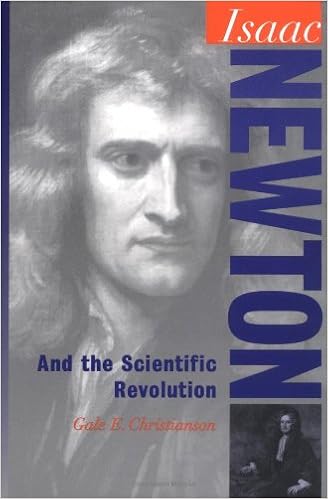
Isaac Newton: And the Scientific Revolution (Oxford Portraits in Science)

Free Ebook Isaac Newton: And the Scientific Revolution (Oxford Portraits in Science)
Searching certain book in guides save may not promise you to get guide. Have you ever faced that issue? This is a very common problem that many individuals face while getting or get such specific book. Customarily, most of them will run out of the book provided as well as supplies in the book anxiety furthermore, when it relates to the brand-new launched publication, the best seller books, or the most prominent books, it will certainly let you wait on even more times to obtain it, unless you have take care of it rapidly.
Reviewing, again, will certainly give you something brand-new. Something that you do not recognize after that revealed to be populared with the book Isaac Newton: And The Scientific Revolution (Oxford Portraits In Science) notification. Some expertise or lesson that re received from reading books is vast. Much more e-books Isaac Newton: And The Scientific Revolution (Oxford Portraits In Science) you check out, more expertise you obtain, as well as more possibilities to consistently like reading publications. Due to this reason, reading book needs to be begun with earlier. It is as what you can obtain from guide Isaac Newton: And The Scientific Revolution (Oxford Portraits In Science)
In order to supply the excellent resources as well as easy means to provide the news and details, it pertains to you by getting the factors to consider that offer thoughtful book ideas. When the inspirations are coming slowly to call for, you can promptly get the Isaac Newton: And The Scientific Revolution (Oxford Portraits In Science) as resources. Why? Since, you could get them from the soft documents of the book that s verified in the web link given.
You could promptly finish them to see the web page and afterwards take pleasure in getting guide. Having the soft data of this book is also adequate. By in this manner, you might not need to bring the book all over. You could save in some compatible tools. When you have actually decided to start checking out Isaac Newton: And The Scientific Revolution (Oxford Portraits In Science) once again, you can begin it anywhere and every time when well done.
From Scientific American
Born early on Christmas morning of 1642, his illiterate father recently dead, Isaac Newton was raised by his grandmother. His life was fed by his vigorous mind and hands; the lonely boy read widely and filled his days with skywatching, kites, sundials, carving and model making. He attended boarding school near his home, ranking second to last among 80 students, but he graduated at 18 the star of the school and went on to the University of Cambridge. A new college graduate, his genius yet unrecognized, he returned home at age 22, after the university was closed by the coming of plague. For almost two years, he worked alone, establishing the modern methods and much of the matter of theoretical physics for two centuries: the ideas of the calculus, its application to motion for apple and moon alike, gravitation made semiquantitative and perhaps universal, and the nature of white light and color. The resemblance to the young Einstein at the Patent Office in Bern is evident; the human differences between Newton, without wife or nearby friends, and Einstein's happier world are manifest. Less a scientific biography than a personal one, it does not try to popularize Newton's physics. Of course, it includes his entire career, his litigious rivalries, his work style, so secretive and shy, and his voluminous accomplishments, until a complex emotional breakdown took him away to official London at age 52. Newton died wealthy and celebrated, even rather less lonely through his niece, a famous beauty, and her slightly scandalous high-society circle.
Read more
Review
"In an authoritative yet accessible style, Christianson chronicles both the significant and the seemingly insignificant--yet critical--events that shaped Newton's early life."--The Horn Book Magazine"An excellent introduction to the life and times of Isaac Newton without difficult discussions of mathematics and classical physics that might bog down the average reader.... If the 25 additional titles in The Oxford Portraits in Science series are as well done as this one, interested book lovers have some excellent reading ahead."--The Science Teacher"Structured around pivotal moments in Newton's life, the book is an excellent reference for biographical data on the great English scientist; in addition, it affords a fine historical perspective of the scientific revolution."--Science Books & Films"This is not just a great biography--it's one of the best-written science books around for young people. Christianson has sifted through the historical documents and accounts of Newton to paint a convincing and intelligent picture of the complex and at times irascible genius."--School Library Journal
Read more
See all Editorial Reviews
Product details
Age Range: 12 and up
Grade Level: 10 - 12
Series: Oxford Portraits in Science
Paperback: 160 pages
Publisher: Oxford University Press; English Language edition (June 4, 1998)
Language: English
ISBN-10: 0195120809
ISBN-13: 978-0195120806
Product Dimensions:
9.1 x 0.6 x 6.4 inches
Shipping Weight: 11.2 ounces (View shipping rates and policies)
Average Customer Review:
4.5 out of 5 stars
8 customer reviews
Amazon Best Sellers Rank:
#1,221,050 in Books (See Top 100 in Books)
As the meager 160 pages indicates, this book does not dig deeply into Newton's life or his works.It does a good job, however, of covering the gist of his life.During his 84 years, Newton accomplished much. But I wanted to know what made Newton what he was. How did he become so profoundly engrossed in math and physics? What drove him? Why was he such a loner? What gave him such tremendous propensity for hard work?Newton's psychology, upbringing, and development as a foremost intellect of his time (perhaps of all time) are covered only superficially.Newton also never married but was honored with the highest distinction and awe. Many justifiably looked upon him as an intellectual titan without peers.I thought there was much to his life besides facts and anecdotes. Too bad this book never goes much beyond that.There is humor spread throughout this book. I was left chuckling a few times.Overall, I recommend this book. This book is like a deluxe Wikipedia version of Newton's life. It won't set the standard for biographical excellence, but it is still a entertaining and fascinating read.
My son picked out this book for an assigned biography project (grade 5). He enjoyed the book and has gotten excited about researching Newton's work and legacy. It is accessible without dumbing things down, and it tells a compelling story without adding fluff or questionable conjecture. A great book for older kids who are interested in science, history, technology, math, and more.
Well written, in-depth book on one of the greatest scientists of all time. The book flows nicely, and has a lot of little facts you didn't know about Newton. Touches slightly on his work, but focuses mainly on his life, achievements and conflicts.
an joyful reading!
I loved this biography for its depth and fascinating insight into the perplexing and most complicated life of Isaac Newton. What an interesting and extremely devoted man. He immersed himself in science to the exclusion of nearly all other interests and relationships, and found himself very alone in his pursuits. However, as most men and women of powerful intellect, he was driven by the need to prove his theories and to understand the Creator's world.Christianson explores Newton's deep Christian feelings and beliefs, his political ideas, and his scientific discoveries and controversies with extraordinary precision and elegant language. This is definitely the best biography I have read this year (2007). I'm so glad I invested the time and money in this glorious and inspiring biography of a never-to-be-forgotten genius!
Christianson has done a wonderful and remarkable job in bringing the Genius (Isaac Newton) alive in pages that is toned with the backdrop of English history. All the major points of this Great Man's Life are covered with an interesting and engaging writing style. There is hardly any "filler " material here, it is to the point, chronological and as I've mentioned, written in a very interesting and engaging way that keeps you interested from chapter to chapter to the very end. Superb job, loved every page !!
Sir Isaac Newton was a mathematical genius, a sharp intellect, but since he was so reclusive, he could have suffered from a type of autism (whatever it was called in 17th century England). "Doing easily what othres find difficult is talent; doing what is impossible for talent is genius." Wordsworth was waxing poetic; I think he was jealous of Newton's scholarship. He'd created the first reflecting telescope, formulated his theory of gravity in 1666 (year of the Great Fire in England), a a new light theory, and calculus. He was the ultimate scientific scholar of this ages.Just because he was a loner, a mystery surrounded his every achievement. Being an introspective child on an island, he wasn't exactly notmal. He earned his degree at Cambridge University where he taught in Trinity College. Later, he instituted confrontations with noted mathematicians and astronomers, such a change in personality. What would he do about today's astronomy "experts" demoting the status of Pluto. That's equilavent to the CEO becoming a menial worker in a factory. Nothing is sacred anymore.This is written in the modern history style, not the facts and facts alone, but supposition and embellishment. A lot of dialogue from so long ago which was not recorded. Hubble stimulated Newton to wori on a quest to solve an ellipitical problem concerning the planets. He was like the father in the play, "Proof," who calculated and kept vague explantions. Genius is creativity turned inward. Newton founded the branch of modern physics called dynamics.Despite his hard-earned fame, he continued his secretive ways. Amazingly, he was appointed to the House of Commons in 1689. He had long silver hair at age 46 and had no need for a white wig. He participated in the most important session of Parliament in English history. He had an illustrious career with some disappointments. In 1727, he died. Albert Einstein, the greatest scientist (also had long hair) since Newton, wrote: "Nature to him was an open book, whose letters he could read without effort." He was entombed in Westminster Abbey not far from Geoffrey Chaucer's crypt. The author was a history professor at Indiana State University. He now lives in Georgia where he is busy doing research.
I have never read a biography quite as good as this. This book has some of the best descriptions of Newton that I've ever heard: "Like Leonardo da Vinci and Benjamin Franklin, Isaac Newton was not just an aimless childhood tinkerer, but a tinkerer playing with ideas and mechanisms." It has so many interesting details about his life, such as the jumping contest at school, or the many different clocks that he made. This book made me realize that Newton wasn't just a great scientist, but a political figure as well, with a seat in Parliment, head of the Royal Society, and Director of the Mint. If it is possible, Cristianson would be my nominee for the Pulitzer Prize.
Isaac Newton: And the Scientific Revolution (Oxford Portraits in Science) PDF
Isaac Newton: And the Scientific Revolution (Oxford Portraits in Science) EPub
Isaac Newton: And the Scientific Revolution (Oxford Portraits in Science) Doc
Isaac Newton: And the Scientific Revolution (Oxford Portraits in Science) iBooks
Isaac Newton: And the Scientific Revolution (Oxford Portraits in Science) rtf
Isaac Newton: And the Scientific Revolution (Oxford Portraits in Science) Mobipocket
Isaac Newton: And the Scientific Revolution (Oxford Portraits in Science) Kindle


0 komentar:
Posting Komentar