PDF Ebook Plants vs. Meats: The Health, History, and Ethics of What We Eat
Reserve tends to be the home window to globe, as what many people state. But, book will not be this terrific thing to the new world if you don't read it as well as recognize. Checking out a publication is not a pressure. It's really a need to be among support in life. Plants Vs. Meats: The Health, History, And Ethics Of What We Eat is even not kind of a large fantastic publication type; every globe can be utilized to suggest you to life better. Also you have excellent feature of strategies, you might need to read this kind of publication. Why?
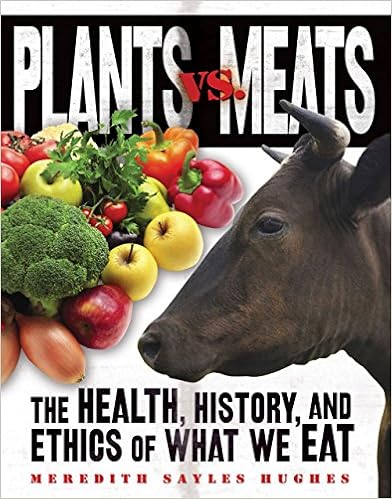
Plants vs. Meats: The Health, History, and Ethics of What We Eat

PDF Ebook Plants vs. Meats: The Health, History, and Ethics of What We Eat
Do you need brand-new referral to accompany your extra time when being at house? Reviewing a publication can be a great selection. It can spare your time usefully. Besides, by reading publication, you could improve your expertise and also experience. It is not only the science or social understanding; several things can be gotten after reading a publication.
But, do you assume that checking out publication will make you really feel bored? Occasionally, when you constantly review as well as finish guide swiftly and hurriedly, you will certainly really feel so burnt out to spend many times to check out. Here, you can prepare for having only little time in a day or juts for investing your spare time. And also the book that we come now is Plants Vs. Meats: The Health, History, And Ethics Of What We Eat, so it will make some enjoyable for you.
When you intend to read it as part of tasks at home or office, this data can be likewise saved in the computer or laptop computer. So, you may not need to be stressed over losing the printed publication when you bring it somewhere. This is one of the best reasons that you should choose Plants Vs. Meats: The Health, History, And Ethics Of What We Eat as one of your analysis products. All very easy way shades your activities to be easier. It will also lead you in making the life runs better.
You have to start caring reading. Even you will not be able to invest guide for all day, you could likewise spend few times in a day for some times. It's not type of strong tasks. You could take pleasure in checking out Plants Vs. Meats: The Health, History, And Ethics Of What We Eat almost everywhere you actually have need. Why? The offered soft documents of this publication will ease you in getting the significance. Yeah, get guide right here from the link that we share.
From School Library Journal
Gr 6 Up—With information about new eating regimes and environmental and health concerns coming out each year, this is a timely, student-friendly primer on the historical, nutritional, and ethical impacts of what and how humans eat. Discussing popular diets, from paleo to locavore, as well as the history of the growth and consumption of food from prehistoric times to the present, this book presents facts from both sides of the vegetarian-omnivore debate, leaving readers to make their own food choices. Sections on the business of farming and the environmental impact of raising animals and crops are eye-opening, highlighting fascinating tidbits ("it takes 441 gallons of water to produce 1 pound of beef"). References to pop culture figures, such as Beyonce, who is a vegan, and a final chapter on recent food developments, including 3-D-printed food, add further appeal. The material is well organized and well labeled and supported by interesting and colorful images and sidebars. VERDICT This solid introduction to where food comes from and the consequences of its consumption and production is a worthy addition.—Marian McLeod, Convent of the Sacred Heart, Greenwich, CT
Read more
Review
"With information about new eating regimes and environmental and health concerns coming out each year, this is a timely, student-friendly primer on the historical, nutritional, and ethical impacts of what and how humans eat. Discussing popular diets, from paleo to locavore, as well as the history of the growth and consumption of food from prehistoric times to the present, this book presents facts from both sides of the vegetarian-omnivore debate, leaving readers to make their own food choices. Sections on the business of farming and the environmental impact of raising animals and crops are eye-opening, highlighting fascinating tidbits ('it takes 441 gallons of water to produce 1 pound of beef'). References to pop culture figures, such as Beyonce, who is a vegan, and a final chapter on recent food developments, including 3-D-printed food, add further appeal. The material is well organized and well labeled and supported by interesting and colorful images and sidebars. VERDICT: This solid introduction to where food comes from and the consequences of its consumption and production is a worthy addition."―School Library Journal (Journal)"Hughes offers a compact but comprehensive guide to food production and consumption in the U.S., taking on its history, as well as ethical and health concerns, in the interest of fostering conscientious eating. While the title, Plants vs. Meats, implies a focus on vegetarianism, the scope is far broader. Hughes lays out an array of dietary options―vegetarian, vegan, flexitarian, omnivore, etc.―rooting the discussion in personal choice. After establishing that people typically give up eating meat for heath or ethical reasons, she takes readers on a whirlwind tour of the major areas impacting the food we eat. First, she looks at the influence that religion, availability, and historical factors (especially war) have had on food consumption. Next up: fad diets. Hughes effectively exonerates maligned foods (fat, carbs, sugar, gluten), pointing to the drawbacks of excess, preservatives, and refined ingredients, while offering expert opinions and contrasting viewpoints in food debates. The following chapter examines food production, comparing industrial and smaller-scale farming practices. Animal welfare is addressed but not sensationalized, as are the pros and cons of monoculture, genetically engineered, and organic crops. Finally, she turns to ideas of sustainability and the future of farming, encouraging readers to be knowledgeable about their choices. Fact boxes and color illustrations further enhance this admirably balanced, bite-sized primer on ethical eating."―starred, Booklist (Journal)"The moral, healthful, and historical reasons we eat what we eat. Former vegetarian and food historian Hughes begins her exposé by defining some '-isms,' detailing what people who call themselves vegan or vegetarian or pescatarian (among others) eat. She touches on the historical factors that influence what we all eat and then examines some religious and philosophical restrictions on what some of us consume. A discussion of fad diets and the ingredients their proponents feel are harmful (gluten, fat, etc.) is followed by a look at the sources of food and the way this affects food availability and the environment. Finally she explores the future of food: insect protein, 3-D printing of food, and hydroponics, among others. Hughes is careful not to paint black-and-white pictures of any stance on food or make strident arguments for eating one type of food over another (though she does promote healthful food over junk food), though some of the people she quotes obviously have strong opinions. She instead urges readers to make informed decisions based on their personal ethics and healthful food information. To further help with this, she provides source notes for the quotes she cites, a glossary, a list of further reading, and website and film lists at the close. Good food for thought that won't leave readers feeling stuffed."―Kirkus Reviews (Journal)
Read more
Product details
Grade Level: 7 - 12
Lexile Measure: 1250L (What's this?)
amznJQ.available('jQuery', function() {
amznJQ.available('popover', function() {
jQuery("#lexileWhatsThis_db").amazonPopoverTrigger({
showOnHover: true,
showCloseButton: false,
title: 'What is a Lexile measure?',
width: 480,
literalContent: 'A Lexile® measure represents either an individual's reading ability (a Lexile reader measure) or the complexity of a text (a Lexile text measure). Lexile measures range from below 200L for early readers and text to above 1600L for advanced readers and materials. When used together Lexile measure help a reader find books at an appropriate level of challenge, and determine how well that reader will likely comprehend a text. When a Lexile text measure matches a Lexile reader measure, this is called a "targeted" reading experience. The reader will likely encounter some level of difficulty with the text, but not enough to get frustrated. This is the best way to grow as a reader - with text that's not too hard but not too easy.',
openEventInclude: "CLICK_TRIGGER"
});
});
});
Library Binding: 96 pages
Publisher: Twenty-First Century Books (January 1, 2016)
Language: English
ISBN-10: 1467780111
ISBN-13: 978-1467780117
Product Dimensions:
7 x 0.2 x 9 inches
Shipping Weight: 14.4 ounces (View shipping rates and policies)
Average Customer Review:
2.9 out of 5 stars
2 customer reviews
Amazon Best Sellers Rank:
#2,321,461 in Books (See Top 100 in Books)
I thought I was going to throw this across the room when I came to the old song of "I became a vegetarian when I realized Harold the chicken had a personality," but I kept on just see what would happen.Hughes goes on to say that her family has since reversed and now eats more beef, etc., for health reasons. I like her writing not because she eats meat, but because she not only changes her position based on more information, she is totally OK with your making your own decisions.Do you want to be vegan? She's OK with that. But she also explains other food options, such as insects, being a localvore, and 3D printed food. (Yes, you read that right.) Hughes goes through food history and touches on such subjects as pesticides, organics, and gluten with respect for the fact that much of we eat is fashion, but works hard at providing science.Good source notes. Nice index and glossary. Good "further reading" section. And at 96 pages, it just barely makes it but will generally be acceptable for kids and teens doing homework.
At least some of the 'facts' they present are based on folklore, thus I wonder how much of the information in this book is actual fact and how much is based on erroneous data. The authors are clearly Evolutionary believers and so all of their history is slanted in that direction. They also didn't bother to do actual research into other believe systems to get actual facts to support their presumptions. I borrowed this book for my son but I did not let him read it. Question about this book is it Non-Fiction or Fiction?
Plants vs. Meats: The Health, History, and Ethics of What We Eat PDF
Plants vs. Meats: The Health, History, and Ethics of What We Eat EPub
Plants vs. Meats: The Health, History, and Ethics of What We Eat Doc
Plants vs. Meats: The Health, History, and Ethics of What We Eat iBooks
Plants vs. Meats: The Health, History, and Ethics of What We Eat rtf
Plants vs. Meats: The Health, History, and Ethics of What We Eat Mobipocket
Plants vs. Meats: The Health, History, and Ethics of What We Eat Kindle


0 komentar:
Posting Komentar